Introduction
Creating a blog post, product page, or marketing article is often harder than it looks—not because of the writing, but because of the images. Many creators know exactly what they want to say, yet they struggle to decide on a feature image or supporting visuals that actually match the content. This is the real problem that AutoImage aims to solve.
AutoImage is a GenAI-powered image generation application designed for writers, bloggers, and creators who already have text but don’t know what images to use. Instead of manually searching stock image websites or experimenting endlessly with prompts, AutoImage lets you paste your text into a simple interface and generate one feature image along with four or five additional contextual images in a single click.
While meaningfully discussing modern AI systems, many blogs focus heavily on tools built with the LangGraph agent framework. However, AutoImage is intentionally built without using the LangGraph agent framework, proving that effective GenAI solutions can be created with lightweight, practical stacks. Still, from an SEO and learning perspective, understanding where the LangGraph agent framework fits in the GenAI ecosystem helps highlight why AutoImage’s simpler approach works so well.
Table of Contents
The Problem AutoImage Solves
If you have ever written an article and paused at the publishing stage, wondering:
- What should my feature image be?
- Which images actually match this content?
- How do I maintain visual consistency across posts?
Then AutoImage is built for you.
Traditional workflows require creators to either design images manually or browse stock libraries, often breaking creative momentum. Some advanced AI workflows rely on orchestration layers such as the LangGraph agent framework, but these setups can be overkill for a focused, single-purpose application like image generation from text.
AutoImage simplifies everything:
- Paste your written content into the text area.
- Click Generate.
- Instantly receive one feature image and multiple supporting images.
No prompt engineering expertise required.
How AutoImage Works (User Experience)
AutoImage follows a clean and intuitive flow that prioritizes usability.
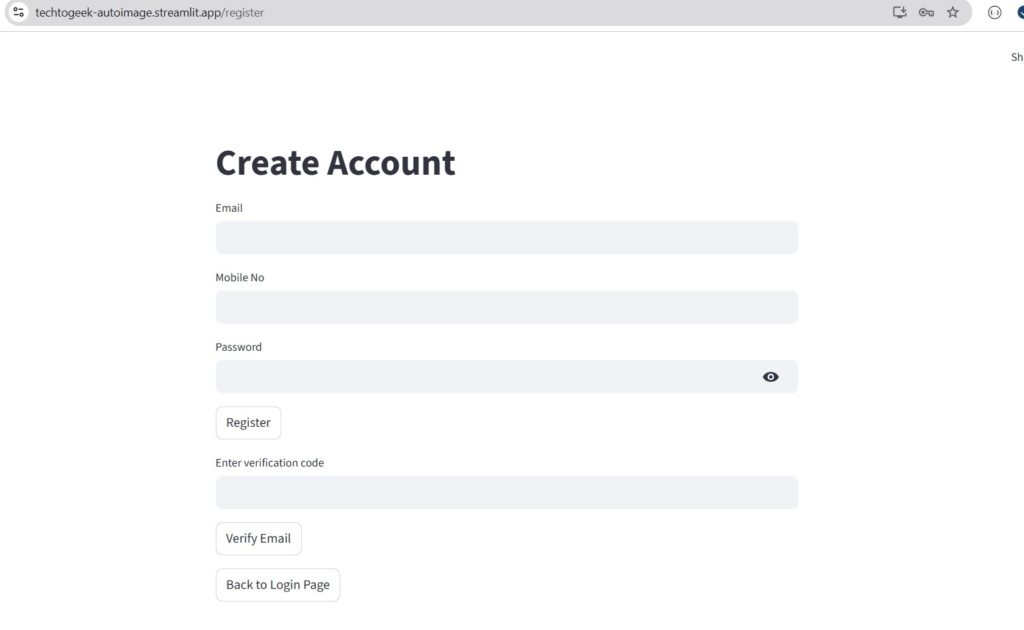
1. User Registration
New users can quickly create an account using the registration page. The process is simple and designed to minimize friction.
2. Login Page
Registered users can securely log in and access the application dashboard.

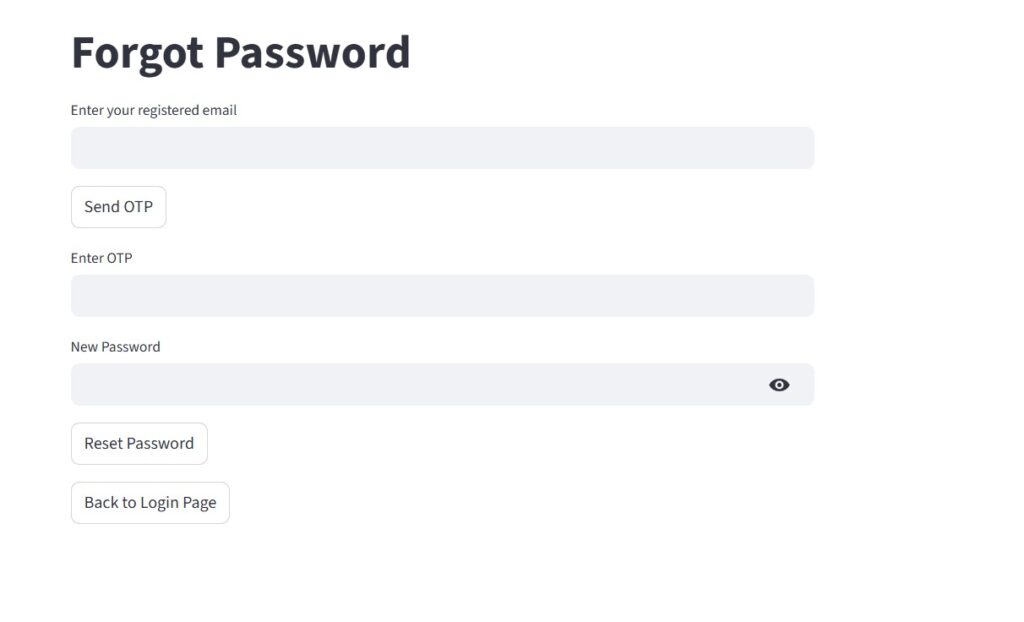
3. Forgot Password
AutoImage includes a standard password recovery flow to ensure a smooth user experience.
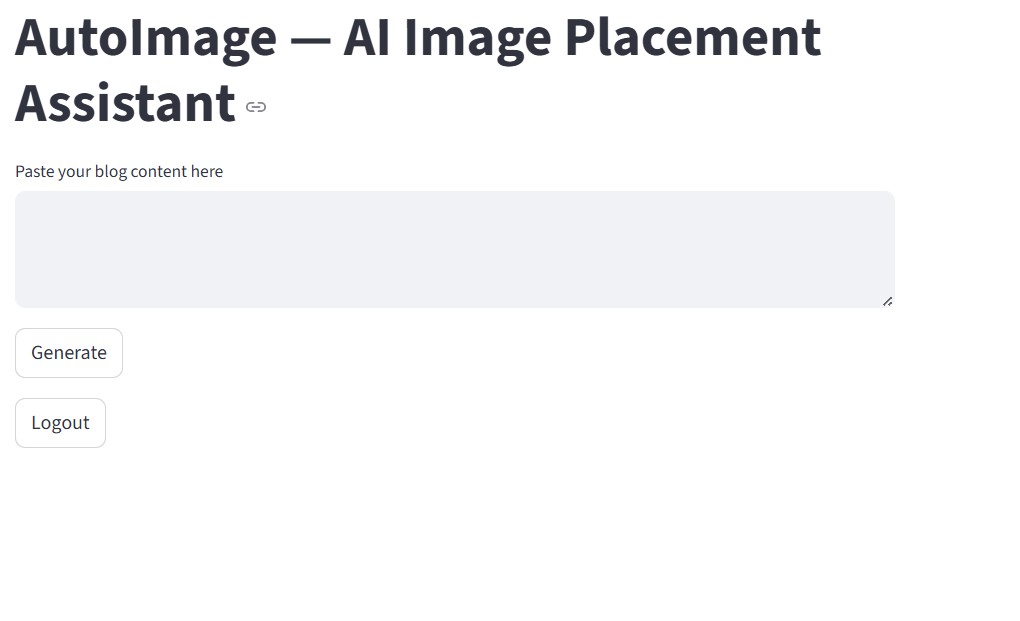
4. My App Dashboard
This is the core interface where users paste their content into the text area.
5. Image Generation Output
After clicking the generate button, AutoImage produces:
- One feature image
- Four or five additional relevant images
These visuals are aligned with the semantic meaning of the text, enabling creators to publish immediately.
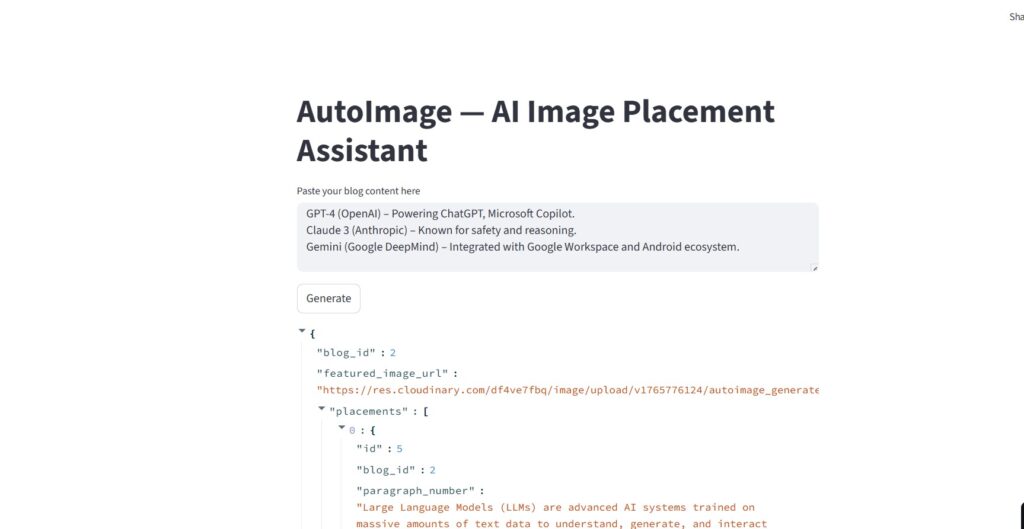
Thanks to Google Gemini for image generation and cloudinary for image storage
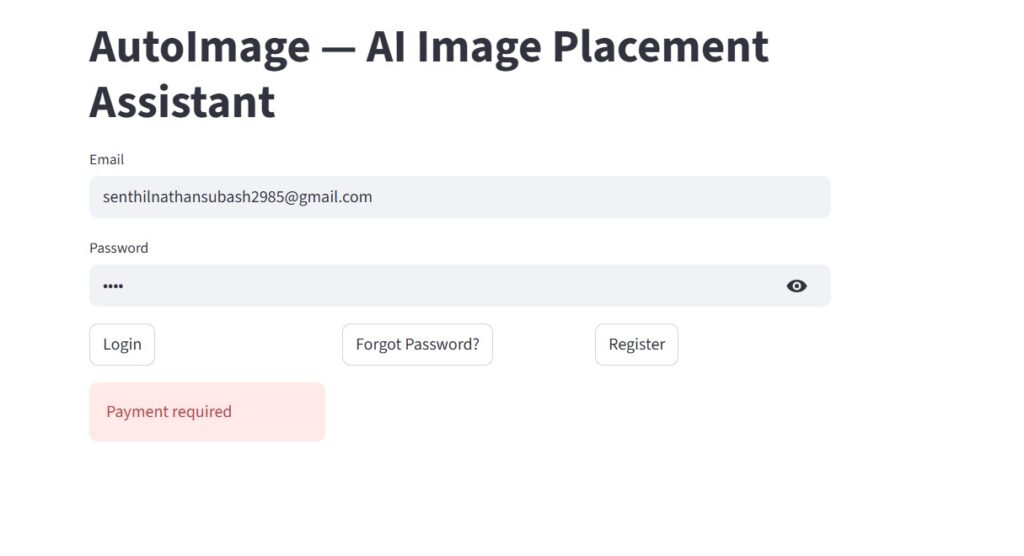
6. Usage Limitation & Payment Page
For first-time users, AutoImage allows free generation. From the second usage onward, a Payment Required page is shown, making the monetization model transparent and straightforward.
Technology Stack Behind AutoImage
AutoImage is intentionally built using a simple and scalable architecture, without relying on complex orchestration frameworks like the LangGraph agent framework.
Frontend – Streamlit
- Clean UI for fast interaction
- Rapid development and deployment
- Ideal for GenAI-driven interfaces
Backend – FastAPI
- High-performance API layer
- Handles image generation requests efficiently
- Easy integration with AI models
Database – MySQL (Aiven)
- Stores user data and usage details
- Reliable managed database solution
Deployment Architecture
- Frontend: Streamlit Cloud
- Backend: Render
- Database: Aiven MySQL
This stack demonstrates that you don’t always need the LangGraph agent framework to build production-ready GenAI apps. Sometimes, simplicity leads to better maintainability.
Why AutoImage Avoids the LangGraph agent framework
The LangGraph agent framework is powerful for building multi-agent, stateful AI workflows. It excels in scenarios involving complex decision trees, tool calling, and long-running reasoning processes.
AutoImage, however, is purpose-built:
- Single primary task: text-to-image generation
- Minimal orchestration required
- Focus on speed and clarity
By avoiding the LangGraph agent framework, AutoImage achieves:
- Faster response times
- Reduced system complexity
- Easier debugging and scaling
That said, understanding the LangGraph agent framework remains valuable for developers exploring more advanced AI agent architectures in the future.
SEO Benefits for Content Creators
AutoImage is particularly useful for bloggers focused on SEO-driven publishing.
Visual Consistency
Search engines favor content with relevant images. AutoImage ensures every article has:
- A strong feature image
- Supporting visuals aligned with keywords
Faster Publishing
Instead of spending hours searching images, creators can publish immediately.
Ideal for Tech Blogs
Sites like TechToGeek.com benefit from faster content production while maintaining quality.
Even blogs that discuss advanced topics such as the LangGraph agent framework can use AutoImage to quickly generate visuals that complement technical explanations.
AutoImage vs AI Agent-Based Systems
Many modern AI tools are built using agent frameworks such as the LangGraph agent framework. While these systems are impressive, they often introduce unnecessary complexity for focused tasks.
| Feature | AutoImage | Agent-Based Systems |
|---|---|---|
| Setup Complexity | Low | High |
| Speed | Fast | Medium |
| Learning Curve | Minimal | Steep |
| Best Use Case | Image generation | Multi-agent reasoning |
AutoImage proves that not every GenAI app needs a heavy agent architecture.
Future Scope
AutoImage can evolve further by adding:
- Custom image styles
- Brand color alignment
- API access for CMS platforms
If future requirements demand complex orchestration, integrating the LangGraph agent framework could be considered—but only when truly necessary.
Who Should Use AutoImage?
- Bloggers and content writers
- SEO professionals
- Tech reviewers
- Indie hackers building fast MVPs
Especially for those writing about AI topics, AutoImage saves valuable time during publishing.
Final Thoughts
AutoImage is a practical example of how GenAI applications don’t have to be complicated to be effective. By focusing on a real problem—choosing the right images for written content—it delivers immediate value.
While the AI world often highlights complex systems built with the LangGraph agent framework, AutoImage shows that a clean Streamlit + FastAPI approach can still compete in real-world usage.
If you are interested in AutoImage or want to collaborate, feel free to get in touch,I am available in contact us.
Thank you for reading.
Frequently Asked Questions (FAQ)
What is AutoImage and how does it work?
AutoImage is a GenAI-powered image generation application that converts written text into a feature image and multiple supporting images. Users simply paste their content into the text area and click generate. AutoImage analyzes the context and creates visually relevant images automatically, without requiring complex prompt engineering or manual image searches.
Is AutoImage built using the LangGraph agent framework?
No. AutoImage is not built using the LangGraph agent framework. It is developed using Streamlit for the frontend, FastAPI for the backend, and MySQL for database management. The LangGraph agent framework is mentioned for educational and SEO context only, as it is commonly discussed in modern GenAI workflows.
Why doesn’t AutoImage use the LangGraph agent framework?
The LangGraph agent framework is best suited for multi-agent, stateful, and complex AI workflows. AutoImage focuses on a single, well-defined task—text-to-image generation—so using the LangGraph agent framework would add unnecessary complexity without improving performance or user experience.
Who should use AutoImage?
AutoImage is ideal for bloggers, SEO professionals, content creators, tech writers, and website owners who struggle to choose appropriate feature images for their articles. It is especially useful for publishers like TechToGeek.com who want to produce high-quality content faster.
Can AutoImage help with SEO-focused content?
Yes. AutoImage helps improve SEO by generating relevant feature images and supporting visuals that enhance content readability and engagement. Articles with proper images tend to perform better in search engines, especially when discussing advanced topics like GenAI and the LangGraph agent framework.
Is AutoImage free to use?
AutoImage allows image generation for the first time at no cost. From the second usage onward, users are redirected to a Payment Required page, making the pricing and usage model transparent.
Where is AutoImage deployed?
AutoImage is deployed using Streamlit Cloud for the frontend, Render for the backend services, and Aiven for the MySQL database. This deployment setup ensures scalability, reliability, and fast performance.
Published by: TechToGeek.com